
TMJ Dysfunction and Jaw Pain
Ready to find out what's really behind your jaw pain?
New patients welcome from Kennewick, Richland, Pasco, West Richland and across the Tri-Cities.
Book Online Call (509) 820-3828
Jaw pain, clicking or popping, a jaw that feels tight or gets stuck, and headaches around the temples can all be signs of a temporomandibular joint (TMJ) problem. Your jaw is a joint like any other extremity joint, and it doesn't work in isolation. At ICE in Kennewick we look at the jaw together with the neck, the skull and your posture.
What is TMJ dysfunction?
The temporomandibular joints connect your lower jaw to your skull, just in front of each ear. They're among the most-used joints in your body. You use them to talk, chew, swallow and yawn. "TMJ" is the name of the joint. Problems with the joint and the chewing muscles are often called TMD (temporomandibular disorders) or TMJ dysfunction.
Common TMJ problems include:
- Muscle-related jaw pain: tight, sore chewing muscles, often linked to clenching or grinding
- Disc problems: a small disc inside the joint that shifts, causing clicking or, sometimes, locking
- Joint irritation or arthritis
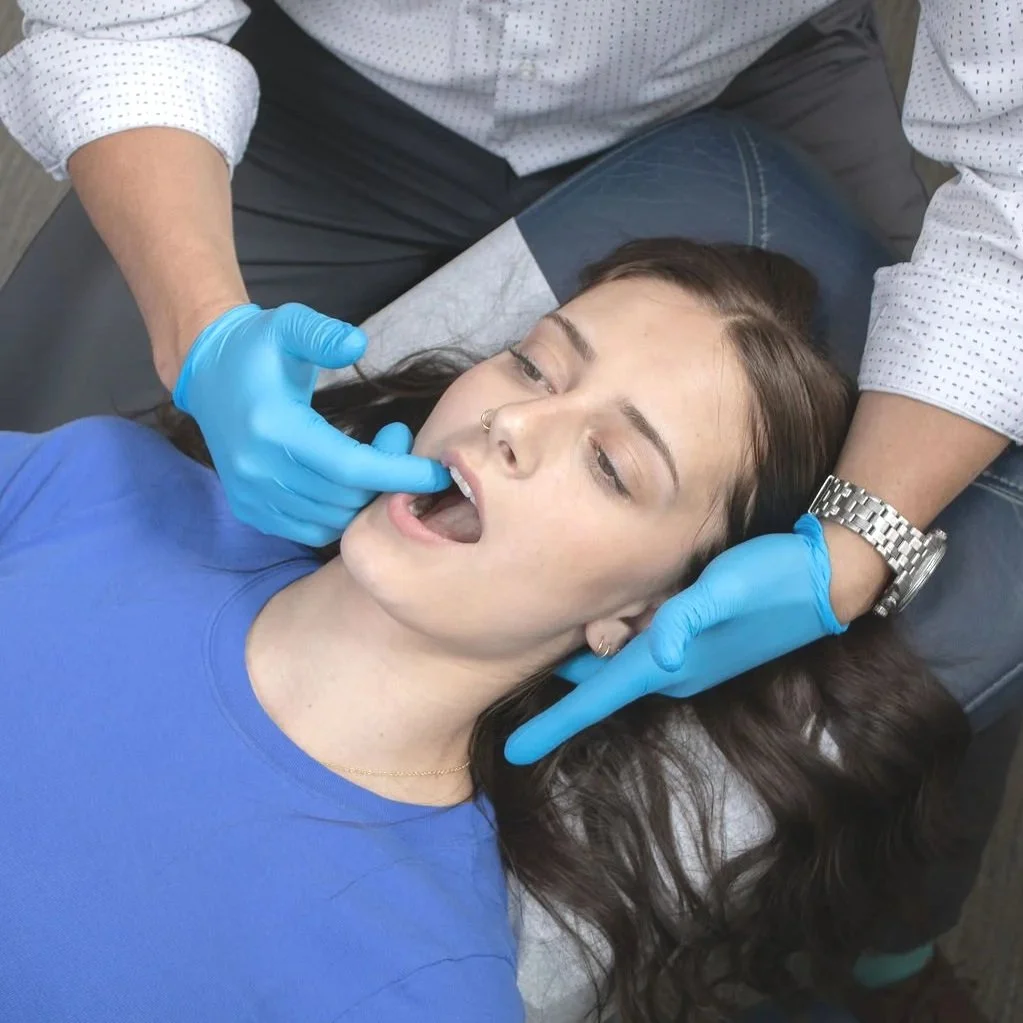
Watch: TMJ Dysfunction Explained: Why Jaw Pain, Clicking & Headaches Keep Coming Back
Common causes: the kinetic-chain view
- Clenching and grinding (bruxism), often during sleep or stress
- Neck posture: when your head sits forward, the muscles under and around the jaw change tension, and jaw mechanics change with them. The upper neck and the jaw share nerve connections, so neck problems often add to jaw pain.
- Upper neck joint restrictions and tight neck and shoulder muscles
- Injury: a blow to the jaw, whiplash from a car accident, or long dental procedures with the mouth held open
- Habits: chewing gum, nail biting, chewing on one side, leaning your chin on your hand
- Stress, which tends to increase clenching and muscle tension
Watch: Why Your Neck Is Causing Jaw Pain & TMJ Symptoms
Symptoms
- Pain in the jaw joint, cheek or in front of the ear
- Clicking, popping or grinding when you open or chew
- Difficulty opening fully, or a jaw that catches or locks
- Headaches around the temples, or facial pain
- Ear fullness or ear pain with a normal ear exam
- Neck and shoulder tension
How ICE treats TMJ and jaw pain
We assess how your jaw opens and closes and whether it moves evenly, check the jaw joints and chewing muscles, and examine your upper neck, posture and the bones of the skull. After treatment we re-check your jaw opening and symptoms.
Depending on your findings, care may include:
- Gentle jaw (TMJ) adjustments and mobilization as part of our extremity care.
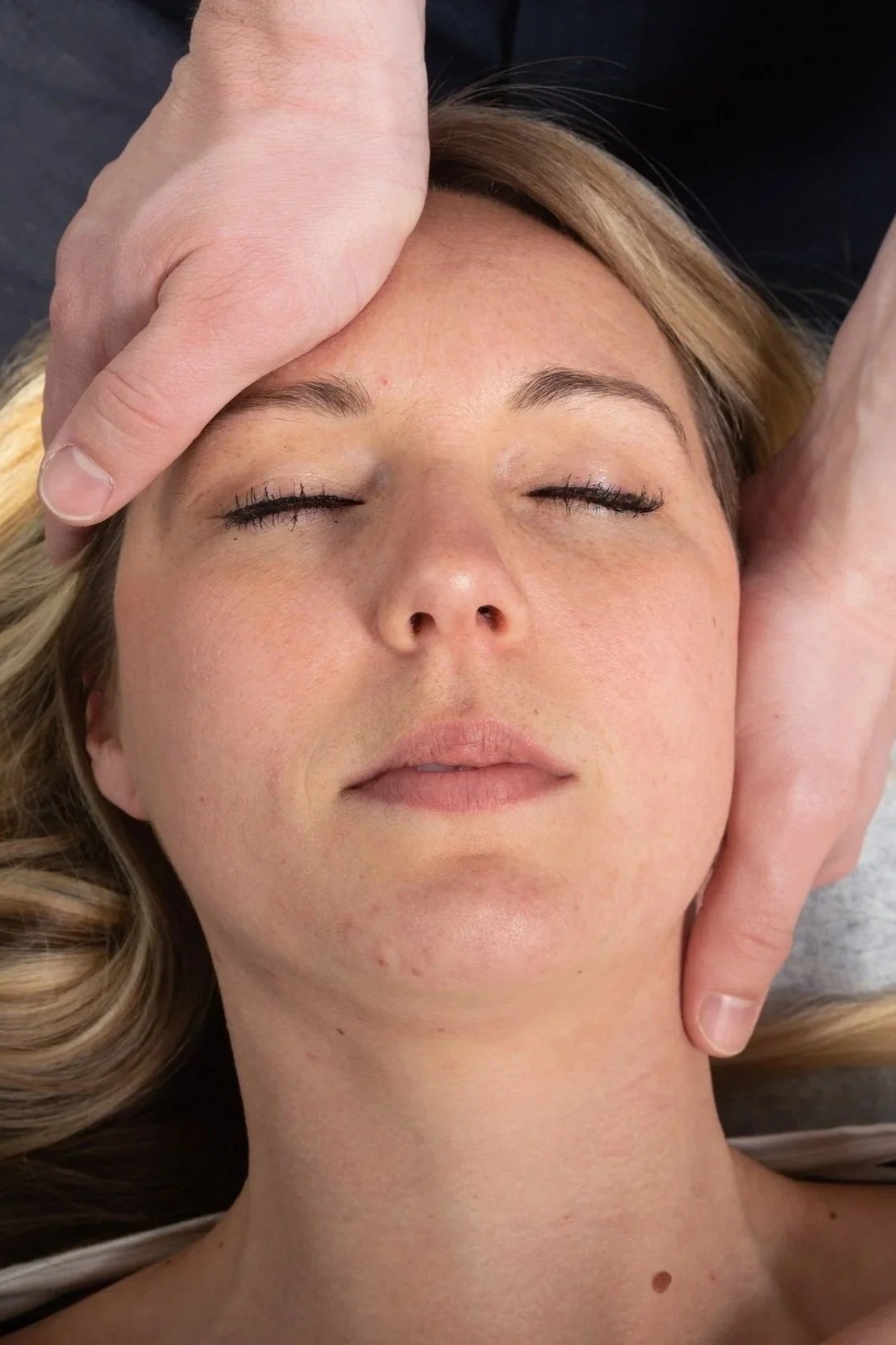
- Cranial manipulation: gentle, precise techniques for the cranial structures around the jaw.
- Spinal adjustments for the upper neck and upper back.
- Manual therapy for the chewing, neck and shoulder muscles.
- Low-level laser therapy for irritated tissue around the joint.
- Corrective exercises: jaw control, tongue and posture drills, and neck exercises you can do at home.
We're also happy to work alongside your dentist. If you clench or grind at night, a dentist-made night guard may be part of the solution.
Treated by an extremity-certified chiropractor who teaches other doctors
The jaw is an extremity joint, and it's connected to everything above and below it. Your care at ICE is led by Dr. Kyle Bryant, DC, CCEP, the founder of Integrative Chiropractic and Extremities. Dr. Bryant is a Certified Chiropractic Extremity Practitioner (CCEP), an advanced credential awarded by the Council on Extremity Adjusting after 105 hours of advanced extremity training and a practical exam. He has 15+ years in practice, he teaches his extremity assessment approach to other chiropractors, and he has been invited onto several professional chiropractic podcasts to talk about extremity adjusting. A former collegiate, semi-pro and international soccer player, he knows first-hand what joint injuries do to the way an athlete moves.
He practices alongside Dr. Joseph Friedman, DC, who builds personalized plans around spinal and extremity adjustments and integrative therapies. Every patient gets extremity care as part of the evaluation, not as an add-on.
What to expect
Initial visits typically take 15–60 minutes, and in most cases treatment starts the same day. Follow-ups usually take 10–20 minutes. Care is gentle. Jaw work doesn't involve forceful techniques. Many TMJ problems improve with conservative care and better daily habits, though long-standing cases may need more time and co-management with your dentist.
At-home care
- Rest your jaw: "lips together, teeth apart, tongue resting on the roof of your mouth."
- Avoid gum, very chewy foods and wide yawns during flare-ups.
- Check your screen posture and take breaks. A forward-head position adds tension to the jaw.
- Do your jaw and neck exercises as shown.
When to see a medical or dental provider
Get prompt care if your jaw locks open or closed, if you have facial swelling, fever, or tooth pain (possible dental infection), or if jaw pain comes on with exertion, chest discomfort, or shortness of breath. Jaw pain can occasionally be a heart warning sign, so call 911. New jaw pain after significant head or face trauma should also be checked medically.
Frequently asked questions
Can a chiropractor help TMJ?
Many jaw problems involve the joint mechanics, the chewing muscles and the neck. All of those can be addressed with gentle hands-on care and exercise. We often work alongside dentists, especially when clenching or bite issues are involved.
Why does my jaw click?
Clicking is often caused by the small disc in the joint moving out of and back into position as you open. Clicking without pain or locking is common and not always a problem, but painful clicking or catching is worth getting checked.
Can TMJ cause headaches?
Yes. Tight chewing muscles and jaw joint irritation can refer pain to the temples and side of the head, and TMJ problems often occur alongside tension-type headaches and neck pain.
Is my neck related to my jaw pain?
Often. Forward-head posture and upper neck restrictions change how the jaw muscles work, and the upper neck and jaw share nerve connections. We check both.
Is TMJ treatment painful?
No. Jaw and cranial techniques are gentle and low-force. We adjust pressure to your comfort.
Get your jaw pain evaluated in Kennewick
You don't have to keep guessing. Our doctors will look at the painful area and the joints above and below it, show you what they find, and walk you through a plan you can understand.
Integrative Chiropractic and Extremities (ICE Clinics) · 7117 W Hood Pl, Ste 130, Kennewick, WA 99336
Hours: Mon/Wed/Fri 9:00–12:30 & 3:30–6:00 · Tue/Thu 9:00–12:30 & 2:30–5:00
Paying for care: we are primarily self-pay, and we also accept Medicare, auto injury claims and L&I (Washington Labor & Industries) claims. No referral is needed. See what to expect as a new patient.
Book Your Visit Online Call (509) 820-3828
Related conditions
Headaches & migraines · Shoulder pain
Back to all conditions we treat.
This page is general health information, not a diagnosis or a promise of results. Everyone responds differently. If you have severe, sudden or worsening symptoms, please contact your medical provider or call 911.