
Shoulder Pain, Rotator Cuff Problems and Frozen Shoulder

Ready to find out what's really behind your shoulder pain?
New patients welcome from Kennewick, Richland, Pasco, West Richland and across the Tri-Cities.
Book Online Call (509) 820-3828
Shoulder pain can make simple things like reaching, dressing and sleeping hard. At Integrative Chiropractic and Extremities (ICE) in Kennewick, shoulder problems are some of the most common extremity conditions we see. We don't just look at the spot that hurts. We look at how your whole shoulder complex, neck, upper back, elbow and wrist work together, because the place you feel pain isn't always the place the problem started.
What is shoulder pain?
Your shoulder is the most mobile joint in your body. That mobility comes at a price: it depends on many small muscles, tendons and joints working in the right order. The ball-and-socket joint (glenohumeral joint) gets most of the attention, but the shoulder also includes the collarbone joints at either end (the AC and SC joints) and the shoulder blade gliding over the rib cage. When any part of that system stops moving well, the others have to work harder.
Common shoulder conditions we evaluate include:
- Rotator cuff strain and tendinopathy: irritation of the four small muscles and tendons that steady the ball in the socket.
- Shoulder impingement: pinching of tendons or the bursa under the bony roof of the shoulder when you lift your arm.
- Frozen shoulder (adhesive capsulitis): a gradual stiffening of the joint capsule that limits motion in every direction.
- Bursitis and biceps tendon irritation at the front of the shoulder.
- Shoulder pain after a fall, sports injury or car accident.
Common causes: the kinetic-chain view
Some shoulder problems start with a single injury. Many build up slowly. Common contributors include:
- Repetitive overhead work or sport: construction, painting, throwing, swimming, volleyball, pickleball.
- Posture and the upper back: a stiff, rounded upper back changes how the shoulder blade sits, which leaves less room for the rotator cuff tendons.
- A shoulder blade that doesn't move in rhythm with the arm, so the small cuff muscles do work the bigger muscles should be sharing.
- Stiff joints elsewhere in the chain: the collarbone joints, the elbow, the wrist and the neck all influence how the shoulder moves.
- "Switched-off" muscles: when a joint stops moving normally, the muscles around it often stop firing as strongly. The body works around the weakness, and those workarounds (compensation patterns) can eventually become pain.
Watch: How to Improve Shoulder Health - the Golden Rule
Symptoms to watch for
- A dull ache on the outside or front of the shoulder, sometimes spreading toward the elbow
- Pain when reaching overhead, behind your back, or across your body
- Pain lying on the affected side at night
- Weakness or a "catching" feeling when you lift your arm
- Gradually losing the ability to raise or rotate your arm (common with frozen shoulder)
How ICE treats shoulder pain
Your first visit starts with a conversation and a hands-on exam. We test how each part of the shoulder moves and how strongly the key muscles fire, then check the neck, upper back, elbow and wrist. That gives us a measurable starting point. After treatment we re-test the same movements, so you can see and feel whether your shoulder is working better.
Depending on what we find, your plan may include:
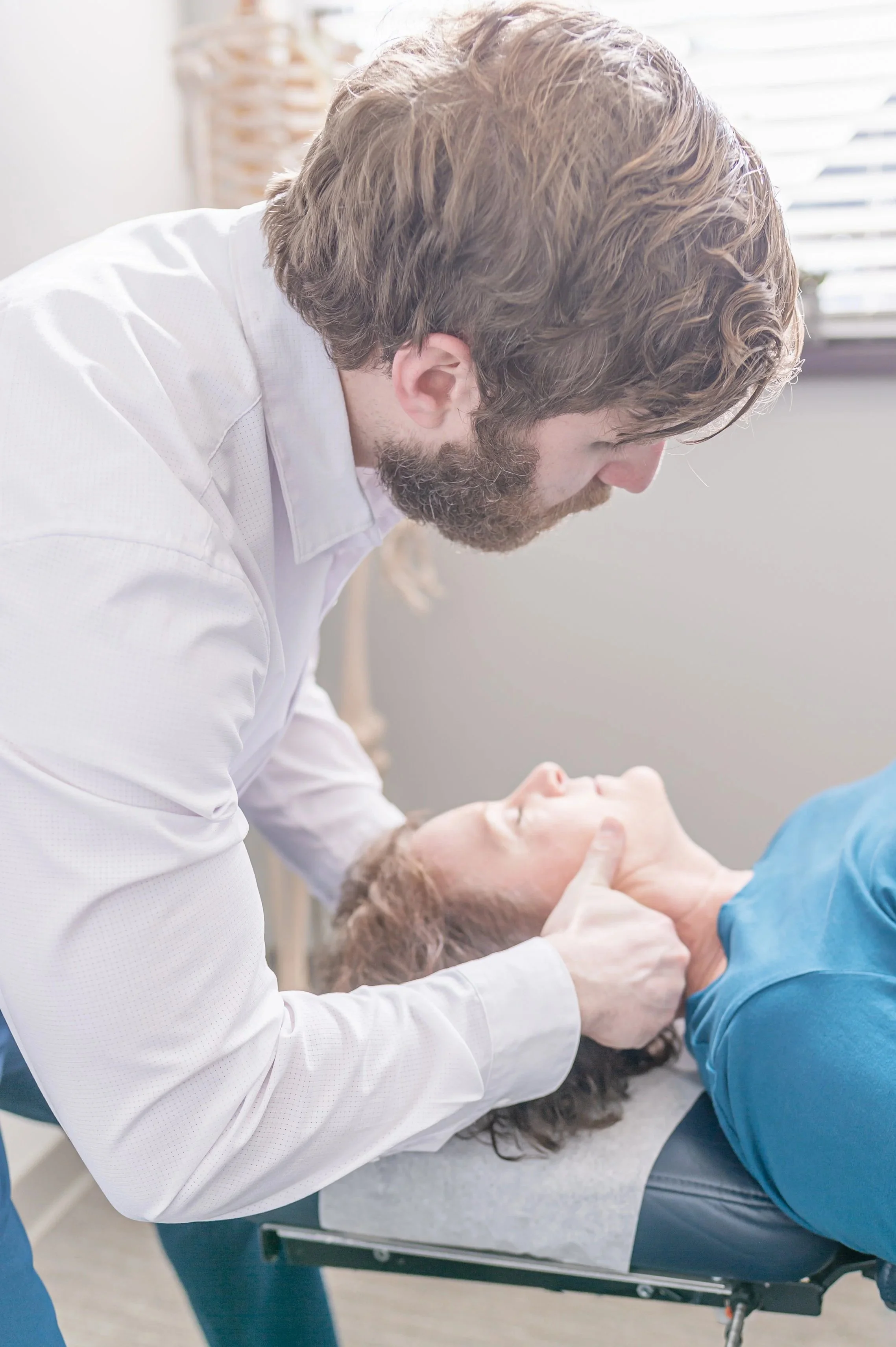
- Extremity adjustments to restore motion in the shoulder joint, collarbone joints, shoulder blade, elbow or wrist.
- Spinal adjustments for the neck and upper back, which share nerves and mechanics with the shoulder.
- Low-level laser therapy to help calm irritated tissue and support healing.
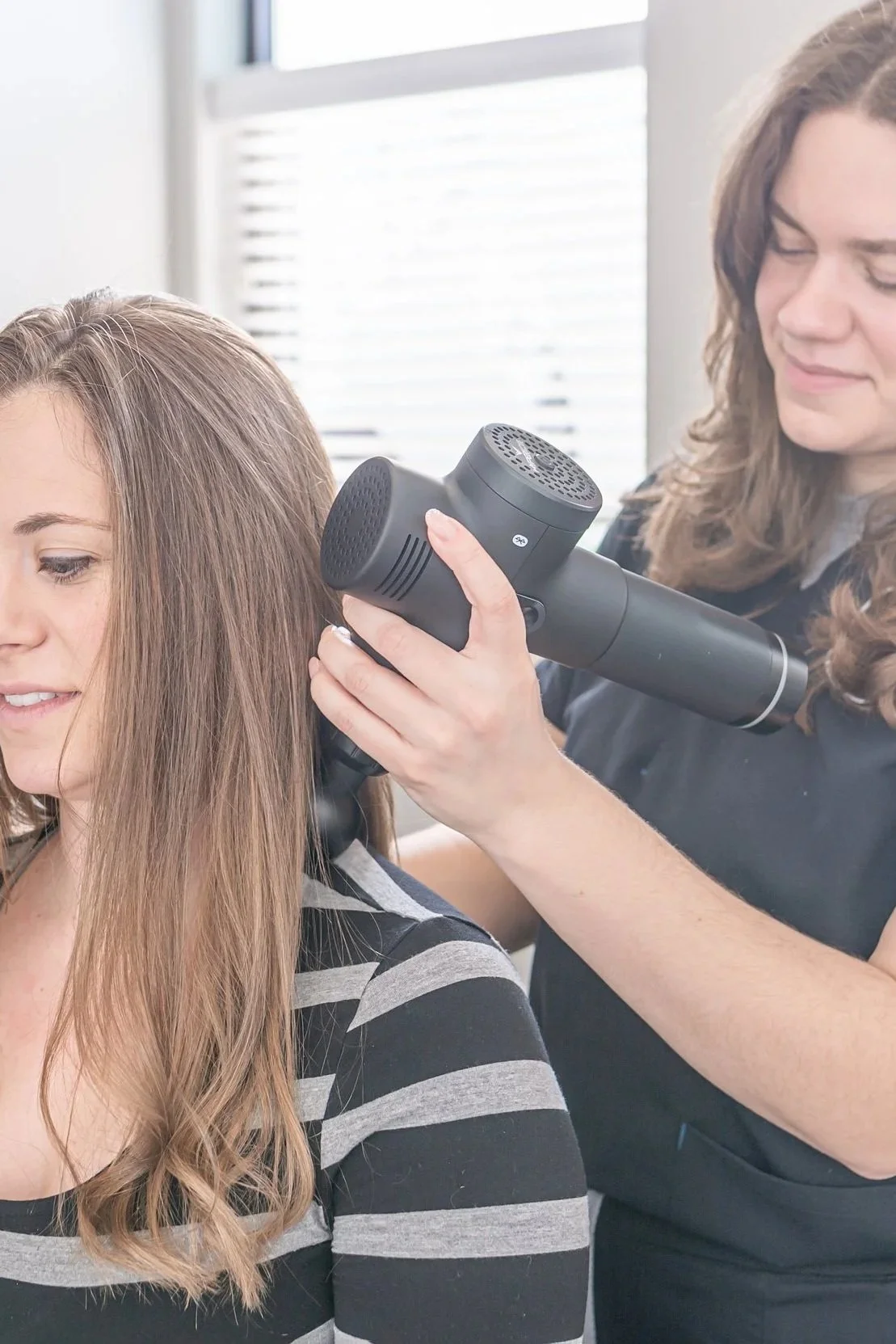
- Manual therapy, including instrument-assisted soft tissue work, and functional cupping for tight, guarded muscles.
- Kinesiology taping to support the shoulder while you stay active.
- Corrective exercises: a short home routine to wake up the shoulder-blade stabilizers and rotator cuff and build them into everyday movement.
Treated by an extremity-certified chiropractor who teaches other doctors
Shoulder problems are exactly where extremity training matters. Your care at ICE is led by Dr. Kyle Bryant, DC, CCEP, the founder of Integrative Chiropractic and Extremities. Dr. Bryant is a Certified Chiropractic Extremity Practitioner (CCEP), an advanced credential awarded by the Council on Extremity Adjusting after 105 hours of advanced extremity training and a practical exam. He has 15+ years in practice, he teaches his extremity assessment approach to other chiropractors, and he has been invited onto several professional chiropractic podcasts to talk about extremity adjusting. A former collegiate, semi-pro and international soccer player, he knows first-hand what joint injuries do to the way an athlete moves.
He practices alongside Dr. Joseph Friedman, DC, who builds personalized plans around spinal and extremity adjustments and integrative therapies. Every patient gets extremity care as part of the evaluation, not as an add-on.
What to expect
Initial visits typically take 15–60 minutes, depending on how complex your case is, and in most cases treatment can begin the same day. Follow-up visits usually take 10–20 minutes and start with a quick re-check of your shoulder's movement and strength. How many visits you need depends on what's going on. We'll give you an honest estimate after your exam.
At-home care between visits
- Keep the shoulder moving gently within a comfortable range. Total rest tends to make stiffness worse.
- Do your prescribed corrective exercises daily. A few focused minutes most days usually beats one long session a week.
- Avoid sleeping directly on the sore shoulder; a pillow under the arm can help.
Watch: Simple Moves to Prevent Shoulder Pain & Injury
When to see a medical doctor right away
Call 911 for shoulder or arm pain together with chest pressure, shortness of breath, sweating or nausea, since this can be a sign of a heart problem. See a medical provider promptly if you can't lift your arm after a fall, the shoulder looks deformed, the joint is hot and red, you have a fever, or you notice spreading numbness or weakness. If we find signs that need imaging or a specialist, we'll tell you and help you get there.
Frequently asked questions
Can a chiropractor help with rotator cuff pain?
Many rotator cuff problems are irritation or strain from overload, poor shoulder-blade movement or a stiff upper back. Those are mechanical problems that extremity adjustments, soft tissue work, laser therapy and corrective exercise are designed to address. A full-thickness tear may need a medical or surgical opinion, and if your exam suggests one, we'll refer you.
How long does frozen shoulder take to get better?
Frozen shoulder is often slow. It commonly moves through painful, stiff and thawing phases over many months. Care focuses on easing pain and restoring motion as safely as possible during each phase. We'll be honest about timelines after your exam.
Why does my shoulder hurt more at night?
Lying on the shoulder compresses irritated tendons and the bursa, and sleeping with the arm overhead or tucked under a pillow can pinch them further. Changing your sleep position and calming the irritated tissue usually helps.
Do you check my neck if my shoulder hurts?
Yes. The neck and upper back share nerves and mechanics with the shoulder, and neck problems can refer pain into the shoulder. We check the spine and the rest of the arm on every shoulder case.
Do I need an MRI before coming in?
Usually not. Most people start with a hands-on exam. If your history or exam suggests a significant tear, fracture or other problem that needs imaging, we'll recommend it and help coordinate.
Get your shoulder pain evaluated in Kennewick
You don't have to keep guessing. Our doctors will look at the painful area and the joints above and below it, show you what they find, and walk you through a plan you can understand.
Integrative Chiropractic and Extremities (ICE Clinics) · 7117 W Hood Pl, Ste 130, Kennewick, WA 99336
Hours: Mon/Wed/Fri 9:00–12:30 & 3:30–6:00 · Tue/Thu 9:00–12:30 & 2:30–5:00
Paying for care: we are primarily self-pay, and we also accept Medicare, auto injury claims and L&I (Washington Labor & Industries) claims. No referral is needed. See what to expect as a new patient.
Book Your Visit Online Call (509) 820-3828
Related conditions
Tennis & golfer's elbow · Carpal tunnel & wrist pain · Sports injuries · Headaches & migraines
Back to all conditions we treat.
This page is general health information, not a diagnosis or a promise of results. Everyone responds differently. If you have severe, sudden or worsening symptoms, please contact your medical provider or call 911.