
Sciatica and Leg Pain

Ready to find out what's really behind your sciatica?
New patients welcome from Kennewick, Richland, Pasco, West Richland and across the Tri-Cities.
Book Online Call (509) 820-3828
Sciatica is pain that travels from the low back or buttock down the back of the leg, sometimes all the way to the foot. It can come with tingling, numbness or weakness, and it can make sitting, driving, bending and sleeping difficult. At ICE in Kennewick we look for what's irritating the nerve. That can be the low back, the pelvis, the hip, or a combination.
What is sciatica?
The sciatic nerve is the largest nerve in the body. It forms from nerve roots in the low back and runs through the buttock and down the back of the leg. "Sciatica" describes symptoms along that path, not a diagnosis by itself. Common sources include:
- Disc herniation or bulge pressing on or irritating a nerve root in the low back
- Narrowing of the spaces where nerves exit the spine (stenosis), more common with age
- Sacroiliac (SI) joint and pelvic dysfunction that refers pain into the buttock and leg
- Deep buttock muscles, such as the piriformis, irritating the nerve (often called piriformis or deep gluteal syndrome)
- Pregnancy-related changes in the pelvis (see prenatal care)
Watch: What is Nerve Flossing?
Common causes: the kinetic-chain view
- Long hours of sitting and bending or lifting with poor mechanics
- A tight low back muscle (the QL) with weak glutes: when the gluteus medius underperforms, the QL works overtime and compresses the low back and pelvis. Our blog explains this common pattern.
- Hip stiffness that forces the low back to bend and twist more
- Foot and ankle mechanics that change how force travels up the leg
- Previous injuries, including car accidents and lifting injuries at work
Symptoms
- Pain from the buttock down the back or side of the leg, often on one side
- Burning, tingling, or "electric" sensations in the leg or foot
- Numbness or weakness in the leg or foot
- Pain that's worse with sitting, coughing, sneezing or bending
- Low back pain, which may or may not be present
How ICE treats sciatica
We start with a thorough history and exam, including nerve tests (reflexes, strength and sensation), spinal and pelvic motion, hip mobility and glute strength, so we can figure out where the nerve is being irritated. If your exam suggests a more serious problem, imaging such as x-rays or an MRI may be recommended first. After treatment we re-test your movement and nerve-tension signs to track progress.
Care may include:
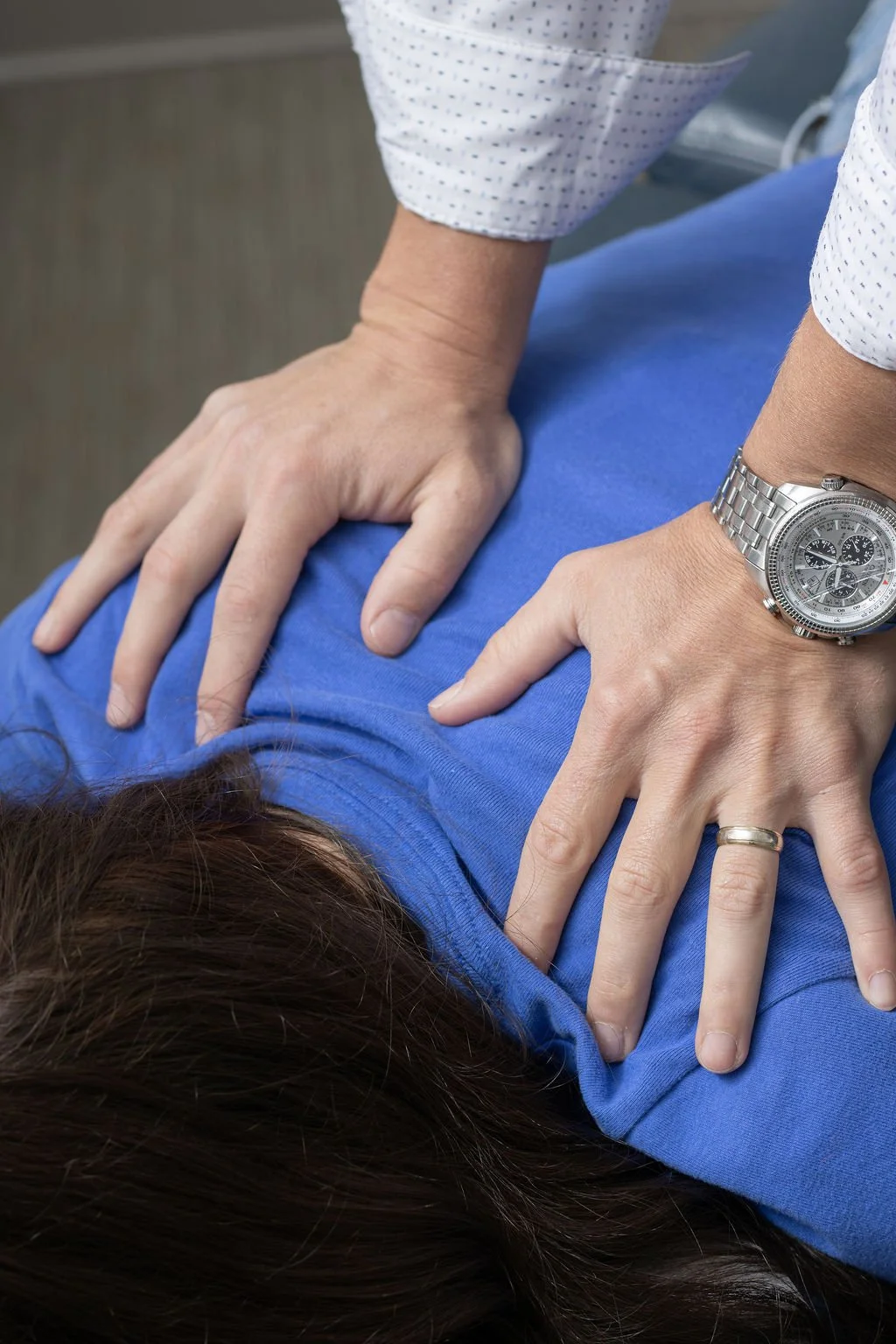
- Spinal adjustments for the low back, pelvis and SI joints.
- Extremity adjustments for the hip, knee, ankle and foot where restrictions are adding to the problem.
- Low-level laser therapy to help calm irritated tissue and nerves.
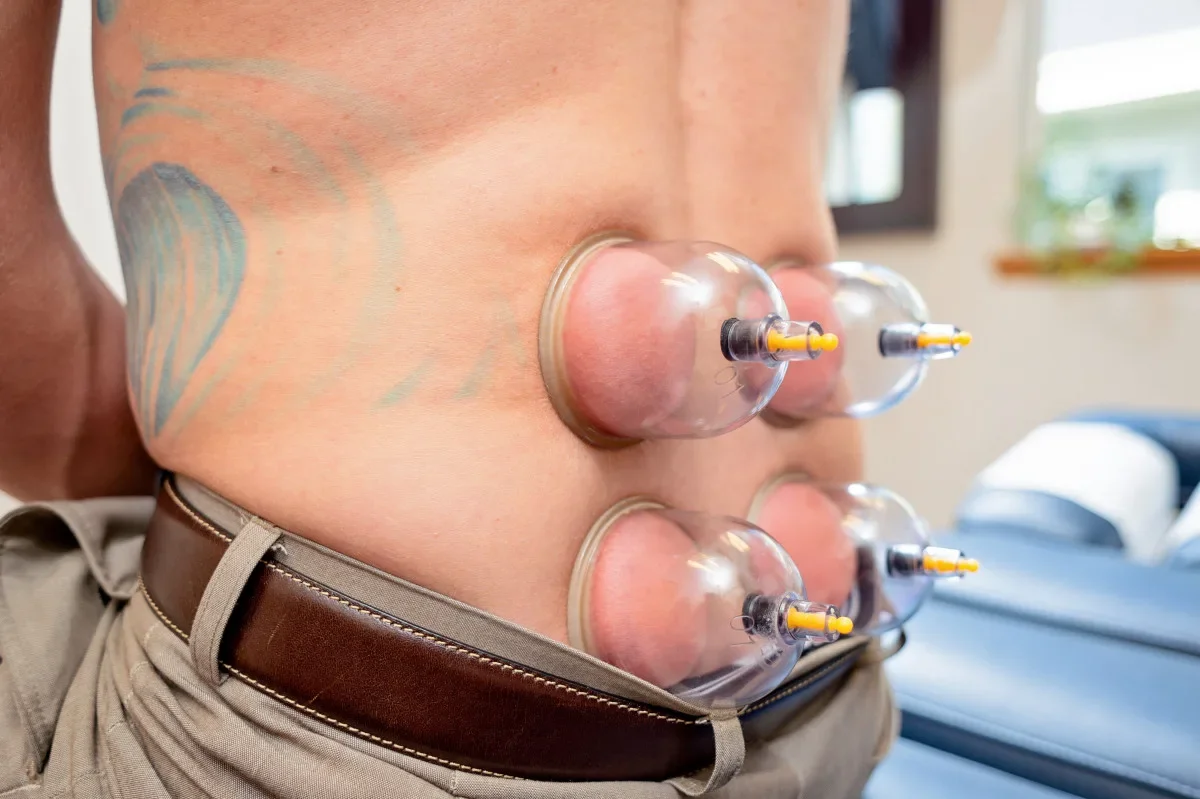
- Manual therapy and functional cupping for tight glutes, piriformis and low back muscles.
- Corrective exercises: nerve glides, glute activation, core control and movement coaching, done briefly and often at home.
Treated by an extremity-certified chiropractor who teaches other doctors
Sciatica often has more than one driver, and finding all of them takes a whole-body exam. Your care at ICE is led by Dr. Kyle Bryant, DC, CCEP, the founder of Integrative Chiropractic and Extremities. Dr. Bryant is a Certified Chiropractic Extremity Practitioner (CCEP), an advanced credential awarded by the Council on Extremity Adjusting after 105 hours of advanced extremity training and a practical exam. He has 15+ years in practice, he teaches his extremity assessment approach to other chiropractors, and he has been invited onto several professional chiropractic podcasts to talk about extremity adjusting. A former collegiate, semi-pro and international soccer player, he knows first-hand what joint injuries do to the way an athlete moves.
He practices alongside Dr. Joseph Friedman, DC, who builds personalized plans around spinal and extremity adjustments and integrative therapies. Every patient gets extremity care as part of the evaluation, not as an add-on.
What to expect
Initial visits typically take 15–60 minutes, and in most cases treatment starts the same day unless imaging is needed first. Follow-ups usually take 10–20 minutes. Many people with sciatica improve with conservative care, and progress is often seen first as pain moving out of the leg and back toward the low back. We'll explain what changes to watch for.
At-home care
- Stay gently active. Walking is often helpful, while prolonged bed rest usually isn't.
- Break up sitting every 30 minutes, and avoid slouching in soft couches and car seats.
- Do your nerve glides and activation exercises as shown. They should not sharply increase leg symptoms.
When to get emergency care
Go to the emergency room right away if you have numbness in the groin, genitals or inner thighs ("saddle" area), new trouble controlling your bladder or bowels, or rapidly worsening weakness in one or both legs. These can be signs of cauda equina syndrome, which needs immediate medical treatment. Also see a medical provider promptly for sciatica with fever, unexplained weight loss, a history of cancer, or after significant trauma.
Frequently asked questions
Can a chiropractor help sciatica?
Many cases of sciatica are mechanical, coming from the low back, pelvis or hip. Those often respond to chiropractic care, soft tissue work and targeted exercise. Your exam will show whether you're a good candidate or need a medical referral first.
Do I need an MRI for sciatica?
Not usually at first. Imaging is typically recommended when there are red-flag signs, significant or worsening weakness, or symptoms that don't improve with conservative care. We'll tell you if we think you need it.
Is it a disc or piriformis syndrome?
They can feel similar. Specific exam tests, the symptom pattern and how symptoms respond to movement help tell them apart, and sometimes both contribute.
What's the best sleeping position for sciatica?
Many people are most comfortable on their side with a pillow between the knees, or on their back with a pillow under the knees. Choose what keeps leg symptoms quietest.
How long does sciatica last?
It varies widely. Many episodes improve over weeks with the right care, while others take longer, especially when a disc is involved. We'll give you an honest estimate after your exam.
Get your sciatica evaluated in Kennewick
You don't have to keep guessing. Our doctors will look at the painful area and the joints above and below it, show you what they find, and walk you through a plan you can understand.
Integrative Chiropractic and Extremities (ICE Clinics) · 7117 W Hood Pl, Ste 130, Kennewick, WA 99336
Hours: Mon/Wed/Fri 9:00–12:30 & 3:30–6:00 · Tue/Thu 9:00–12:30 & 2:30–5:00
Paying for care: we are primarily self-pay, and we also accept Medicare, auto injury claims and L&I (Washington Labor & Industries) claims. No referral is needed. See what to expect as a new patient.
Book Your Visit Online Call (509) 820-3828
Related conditions
Hip pain · Knee pain & IT band · Sports injuries
Back to all conditions we treat.
This page is general health information, not a diagnosis or a promise of results. Everyone responds differently. If you have severe, sudden or worsening symptoms, please contact your medical provider or call 911.