
Hip Pain and Hip Mobility Problems

Ready to find out what's really behind your hip pain?
New patients welcome from Kennewick, Richland, Pasco, West Richland and across the Tri-Cities.
Book Online Call (509) 820-3828
Hip pain can show up in the groin, on the outside of the hip, in the buttock, or even down the thigh. It can make walking, climbing stairs, getting out of the car and sleeping on your side miserable. At ICE in Kennewick we evaluate hip pain as part of the chain that connects your feet, knees, pelvis and low back, because each of those affects how the hip is loaded with every step.
What causes hip pain?
The hip is a deep ball-and-socket joint built for both stability and mobility. Pain can come from the joint itself, from the tendons and bursa on the outside of the hip, from the muscles of the buttock, or from the low back and pelvis referring pain into the hip region. Conditions we commonly evaluate include:
- Lateral hip pain (gluteal tendinopathy / trochanteric bursitis): pain on the outside of the hip, often worse lying on that side
- Hip joint stiffness and early arthritis: groin pain and stiffness, especially after sitting
- Hip flexor strain and tightness from sitting, running or kicking sports
- Piriformis and deep buttock pain, sometimes with symptoms into the leg
- Sacroiliac (SI) joint pain felt around the back of the hip
- Hip pain during pregnancy (see our prenatal care page)
Common causes: the kinetic-chain view
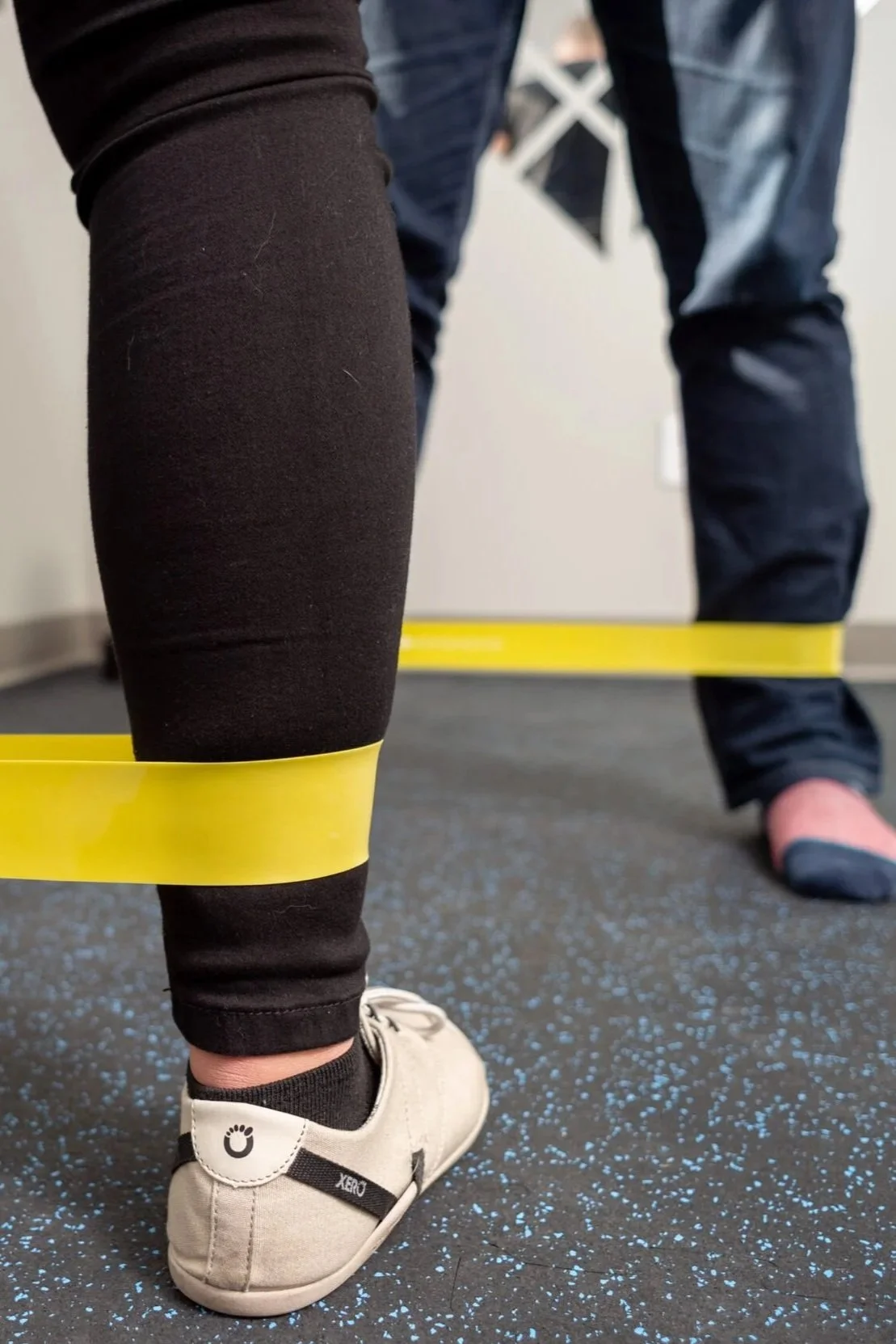
- Weak or "switched-off" glute muscles: the gluteus medius keeps your pelvis level when you stand on one leg. When it underperforms, other muscles (like the low-back quadratus lumborum) tighten up to compensate, and the side of the hip gets overloaded.
- Feet and ankles: a stiff big toe, a flat or rigid foot, or an old ankle sprain changes how force travels up the leg.
- Knees: knee problems and hip problems often travel together.
- Long hours of sitting: tight hip flexors and less hip extension.
- Pelvis and low back: SI joint and lumbar restrictions change how the hip moves and can refer pain.
Watch: The Key to Healthier Hips
Symptoms
- Pain on the outside of the hip, especially lying on that side or climbing stairs
- Groin pain or a deep ache with walking, putting on socks, or getting in and out of the car
- Stiffness after sitting or first thing in the morning
- A limp, or feeling like the hip "gives"
- Buttock pain that may spread down the back of the thigh
How ICE treats hip pain
We test hip motion in every direction, single-leg balance, and the strength of the glutes and hip stabilizers. We also check your feet, ankles, knees, pelvis and low back. After treatment we re-test the same movements so you can see and feel the change.
Your plan may include:
- Extremity adjustments for the hip, knee, ankle and foot.
- Spinal adjustments for the low back, pelvis and SI joints.
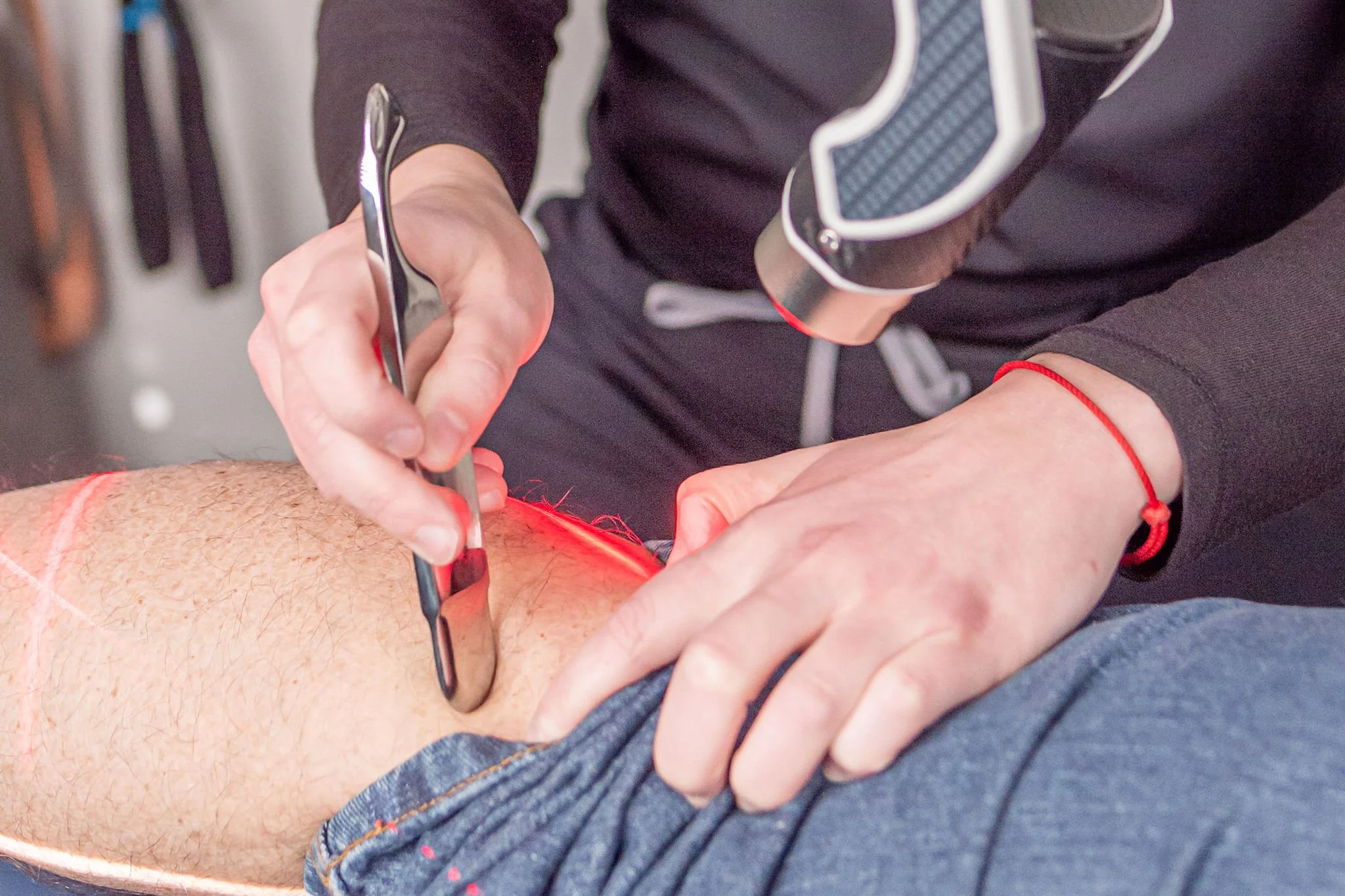
- Low-level laser therapy for irritated tendons and tissue.
- Manual therapy and functional cupping for tight hip flexors, glutes and deep rotators.
- Corrective exercises: glute activation, hip mobility and single-leg control, done briefly and often at home.
Treated by an extremity-certified chiropractor who teaches other doctors
The hip sits in the middle of the kinetic chain, so it needs someone who examines above and below it. Your care at ICE is led by Dr. Kyle Bryant, DC, CCEP, the founder of Integrative Chiropractic and Extremities. Dr. Bryant is a Certified Chiropractic Extremity Practitioner (CCEP), an advanced credential awarded by the Council on Extremity Adjusting after 105 hours of advanced extremity training and a practical exam. He has 15+ years in practice, he teaches his extremity assessment approach to other chiropractors, and he has been invited onto several professional chiropractic podcasts to talk about extremity adjusting. A former collegiate, semi-pro and international soccer player, he knows first-hand what joint injuries do to the way an athlete moves.
He practices alongside Dr. Joseph Friedman, DC, who builds personalized plans around spinal and extremity adjustments and integrative therapies. Every patient gets extremity care as part of the evaluation, not as an add-on.
Real feedback from a patient
Dr. Kyle Bryant won my admiration and respect … when I was dealing with hip pain as well as numbness in my hands due to my profession of being a Massage Therapist. He not only helped me get my hip strength balanced … I had been doing wonderful for almost 5 years with the aid of exercises Dr. Bryant has taught me.
— Shawna C., Google review (via Birdeye)
What to expect
Initial visits typically take 15–60 minutes, and in most cases treatment starts the same day. Follow-ups usually take 10–20 minutes. Some hip problems, especially early joint stiffness or tendon pain that has lasted a long time, need patience and steady home exercise.
At-home care
- Avoid sleeping directly on the painful side. A pillow between the knees helps when lying on the other side.
- Avoid crossing your legs and standing with your weight sunk into one hip.
- Break up long periods of sitting, and do your activation exercises daily.
Watch: How to improve Hip Mobility
When to see a medical doctor
Seek urgent care if you can't bear weight after a fall (especially if you're older or have osteoporosis), you have hip pain with fever or a hot, swollen joint, or the pain is sudden and severe without a clear reason. A child or teen with groin or knee pain and a limp should be seen by a medical provider promptly. If your exam points to significant arthritis or another problem that needs imaging, we'll refer you.
Frequently asked questions
Can a chiropractor help with hip pain?
Many types of hip pain are mechanical, coming from joint stiffness, weak stabilizing muscles, or problems in the back, knee or foot. Those respond well to a hands-on, movement-based approach. Your exam will show whether you're a good fit.
Why does the outside of my hip hurt when I lie on it?
This is commonly irritation of the gluteal tendons and the bursa on the outside of the hip. Compression from lying on it, crossing your legs, or standing with your hip shifted out tends to aggravate it.
Can my feet cause hip pain?
They can contribute. How your foot and ankle move affects how the knee and hip rotate and absorb force. We check your feet on every hip case.
Is my hip pain actually coming from my back?
Sometimes. The low back and SI joints can refer pain to the buttock, hip and thigh. Our exam checks both so we treat the right area.
Will exercise make my hip arthritis worse?
The right exercise usually helps. Gentle, consistent movement and strength work generally improve how arthritic hips feel and function. We'll tailor exercises to your hip and adjust them as you improve.
Get your hip pain evaluated in Kennewick
You don't have to keep guessing. Our doctors will look at the painful area and the joints above and below it, show you what they find, and walk you through a plan you can understand.
Integrative Chiropractic and Extremities (ICE Clinics) · 7117 W Hood Pl, Ste 130, Kennewick, WA 99336
Hours: Mon/Wed/Fri 9:00–12:30 & 3:30–6:00 · Tue/Thu 9:00–12:30 & 2:30–5:00
Paying for care: we are primarily self-pay, and we also accept Medicare, auto injury claims and L&I (Washington Labor & Industries) claims. No referral is needed. See what to expect as a new patient.
Book Your Visit Online Call (509) 820-3828
Related conditions
Knee pain & IT band · Sciatica · Plantar fasciitis & heel pain · Sports injuries
Back to all conditions we treat.
This page is general health information, not a diagnosis or a promise of results. Everyone responds differently. If you have severe, sudden or worsening symptoms, please contact your medical provider or call 911.