
Tennis Elbow and Golfer's Elbow

Ready to find out what's really behind your elbow pain?
New patients welcome from Kennewick, Richland, Pasco, West Richland and across the Tri-Cities.
Book Online Call (509) 820-3828
If it hurts to grip a coffee cup, turn a doorknob, swing a hammer or a racquet, or carry groceries, you may be dealing with tennis elbow or golfer's elbow. Despite the names, most people who get them don't play either sport. At ICE in Kennewick we treat the sore tendon, and we also look for the reason it's being overloaded, which is often in the wrist, forearm, shoulder or neck.
What are tennis elbow and golfer's elbow?
Both are tendon overload problems where forearm muscles attach to the elbow.
- Tennis elbow (lateral epicondylalgia) affects the outside of the elbow, where the muscles that lift the wrist and fingers attach.
- Golfer's elbow (medial epicondylalgia) affects the inside of the elbow, where the muscles that bend the wrist and grip attach.
These conditions used to be called "epicondylitis," suggesting inflammation. Research now suggests that longer-lasting cases are more about a tendon that has been overloaded faster than it could adapt. That's why the goal is to reduce the overload and gradually rebuild the tendon's capacity, not just to calm pain.
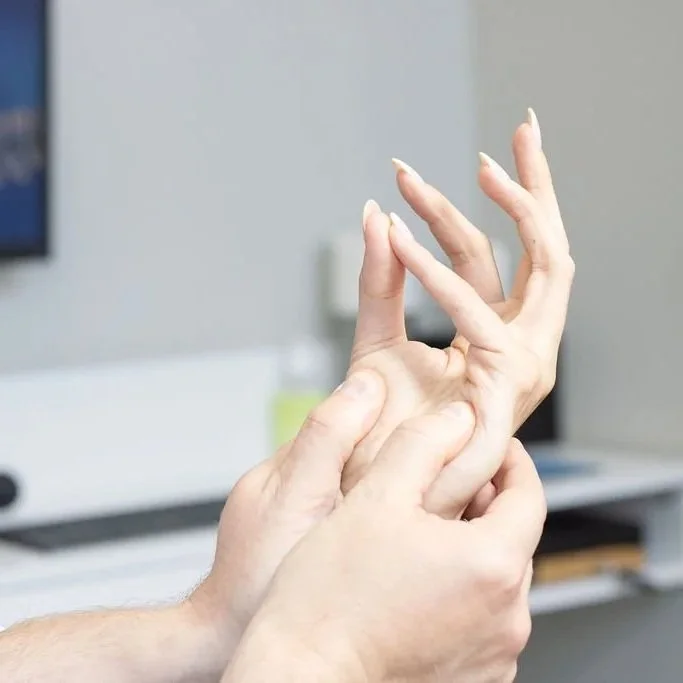
Common causes: the kinetic-chain view
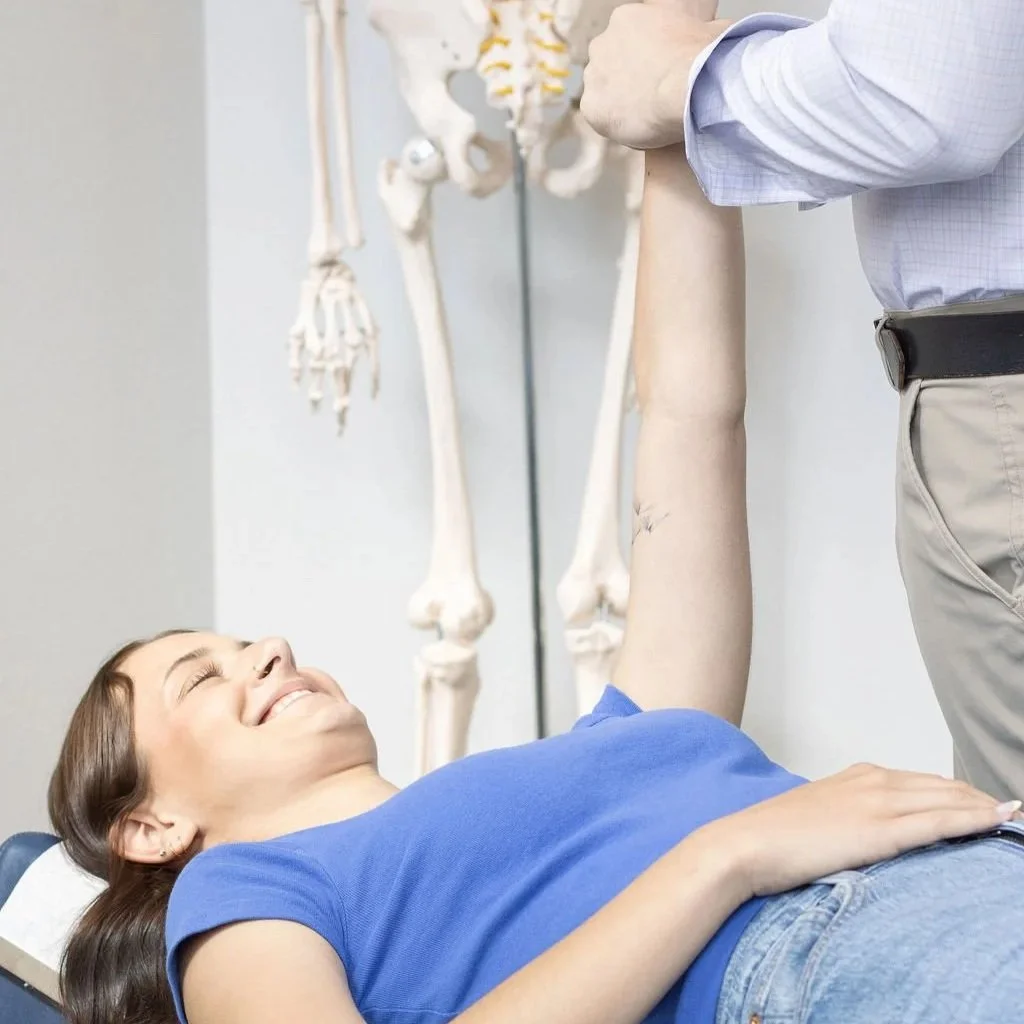
- Repetitive gripping and wrist motion: tools, keyboards and mice, yard work, lifting, racquet and club sports.
- A sudden jump in activity: a weekend project, a new job task, or more time on the court.
- Stiff wrist or forearm joints, which make the forearm muscles pull harder on their tendon attachments.
- A shoulder that isn't doing its share: when the shoulder and shoulder blade don't stabilize the arm, the forearm and elbow often take up the slack.
- The neck: nerves that serve the forearm start in the neck, and neck problems can add to or mimic elbow pain.
Symptoms
- Pain on the outside (tennis) or inside (golfer's) of the elbow, sometimes spreading into the forearm
- Pain when gripping, lifting with the palm down, shaking hands, or twisting a lid
- A weaker grip
- Morning stiffness in the elbow or forearm
How ICE treats elbow pain
We start by finding out which tendon is irritated and what's overloading it. We test grip, wrist and elbow motion and muscle strength, then check the shoulder and neck. After treatment we re-test grip and the painful movements so you can tell whether the arm is working better.
Your plan may include:
- Extremity adjustments for the elbow, the small joints of the wrist and forearm, and the shoulder.
- Spinal adjustments if the neck is contributing.
- Low-level laser therapy to help calm the irritated tendon and support tissue healing.
- Manual therapy, including instrument-assisted soft tissue work, and functional cupping for tight forearm muscles.
- Kinesiology taping to take some load off the tendon during work or sport.
- Corrective exercises: progressive loading of the forearm tendons plus shoulder-blade and grip work, so the tendon gets stronger rather than just quieter.
Treated by an extremity-certified chiropractor who teaches other doctors
Elbow pain is rarely just an elbow problem. Your care at ICE is led by Dr. Kyle Bryant, DC, CCEP, the founder of Integrative Chiropractic and Extremities. Dr. Bryant is a Certified Chiropractic Extremity Practitioner (CCEP), an advanced credential awarded by the Council on Extremity Adjusting after 105 hours of advanced extremity training and a practical exam. He has 15+ years in practice, he teaches his extremity assessment approach to other chiropractors, and he has been invited onto several professional chiropractic podcasts to talk about extremity adjusting. A former collegiate, semi-pro and international soccer player, he knows first-hand what joint injuries do to the way an athlete moves.
He practices alongside Dr. Joseph Friedman, DC, who builds personalized plans around spinal and extremity adjustments and integrative therapies. Every patient gets extremity care as part of the evaluation, not as an add-on.
What to expect
Your first visit includes a history, a hands-on exam, and in most cases your first treatment. Follow-ups are usually 10–20 minutes. Tendons adapt slowly, so a recent flare often settles in weeks, while a problem that has lasted months usually takes longer. We'll show you how to adjust your grip, tools or workstation so you're not re-irritating the tendon between visits.
At-home care
- Reduce the aggravating activity without stopping all use. Gentle, pain-free use helps tendons heal.
- A counterforce brace or tape can help some people during heavier tasks.
- Follow your exercise progression. Tendons respond to steady, gradual loading.
When to see a medical doctor
Get prompt medical care if the elbow is deformed or you can't move it after a fall, the joint is hot, red and swollen (especially with fever), or you have persistent numbness or weakness in your hand. If we suspect a tear, fracture or nerve problem that needs further testing, we'll refer you.
Frequently asked questions
Can I get tennis elbow if I don't play tennis?
Yes. Most cases come from work, home projects, lifting or computer use. Any repeated gripping or wrist extension can overload the tendon on the outside of the elbow.
Should I rest my arm completely?
Usually not. Complete rest can weaken the tendon further. The goal is to back off the activities that flare it while keeping gentle, pain-free use and gradually adding strength work.
Why do you check my shoulder and neck for elbow pain?
When the shoulder and shoulder blade don't stabilize the arm well, the forearm muscles often overwork. Nerves to the forearm also start in the neck. Treating only the elbow can leave the real driver in place.
How long does tennis elbow take to heal?
It varies a lot. Recent cases can improve in a few weeks, while long-standing tendon problems often take a few months of consistent loading. We'll give you an estimate after your exam.
Is laser therapy painful?
No. Low-level laser therapy doesn't generate heat or damage tissue, and most people feel little or nothing during treatment.
Get your elbow pain evaluated in Kennewick
You don't have to keep guessing. Our doctors will look at the painful area and the joints above and below it, show you what they find, and walk you through a plan you can understand.
Integrative Chiropractic and Extremities (ICE Clinics) · 7117 W Hood Pl, Ste 130, Kennewick, WA 99336
Hours: Mon/Wed/Fri 9:00–12:30 & 3:30–6:00 · Tue/Thu 9:00–12:30 & 2:30–5:00
Paying for care: we are primarily self-pay, and we also accept Medicare, auto injury claims and L&I (Washington Labor & Industries) claims. No referral is needed. See what to expect as a new patient.
Book Your Visit Online Call (509) 820-3828
Related conditions
Carpal tunnel & wrist pain · Shoulder pain · Sports injuries
Back to all conditions we treat.
This page is general health information, not a diagnosis or a promise of results. Everyone responds differently. If you have severe, sudden or worsening symptoms, please contact your medical provider or call 911.