
Carpal Tunnel Syndrome and Wrist Pain
Ready to find out what's really behind your wrist or hand pain?
New patients welcome from Kennewick, Richland, Pasco, West Richland and across the Tri-Cities.
Book Online Call (509) 820-3828
Waking up with numb, tingling fingers, dropping things, or aching wrists after a day at the keyboard or on the job site can be worrying. At ICE in Kennewick we evaluate carpal tunnel symptoms and wrist pain by looking at the whole path the nerve travels, from your neck to your fingertips, and at how the small bones of your wrist are moving.
What is carpal tunnel syndrome?
The carpal tunnel is a narrow passage on the palm side of your wrist, formed by the small wrist bones and a tough ligament across the top. The median nerve and nine tendons pass through it. When the space gets crowded or the nerve gets irritated, you can feel numbness, tingling or weakness in the thumb, index, middle and part of the ring finger.
Not every case of hand numbness is true carpal tunnel syndrome. The median nerve can also be irritated higher up at the forearm (for example, by the pronator teres muscle) or where the nerve roots leave the neck. Other common wrist problems we see include:
- De Quervain's tenosynovitis: painful tendons on the thumb side of the wrist, common in new parents and phone users
- Wrist sprains and pain after a fall on an outstretched hand
- Overuse wrist pain from lifting, tools, gaming or desk work
Common causes: the kinetic-chain view

- Repetitive or sustained wrist positions: typing, mouse use, tools, vibration, assembly work
- Stiff wrist bones: the eight small carpal bones should glide slightly. When they don't, the tunnel may lose room and the forearm muscles work harder.
- Forearm and elbow tightness along the nerve's path
- Neck and posture: a forward-head, rounded-shoulder posture can irritate the nerve roots and the space where nerves pass between the neck and armpit (thoracic outlet)
- Health factors such as pregnancy, diabetes, thyroid conditions and arthritis can also make carpal tunnel more likely. We'll ask about these.
Symptoms
- Numbness or tingling in the thumb and first fingers, often worse at night or on waking
- Shaking or flicking your hand to "wake it up"
- Clumsiness or dropping things
- Aching in the wrist or forearm
- Thumb-side wrist pain when gripping or lifting (often De Quervain's)
How ICE treats carpal tunnel and wrist pain
We test sensation, grip and pinch strength, wrist and forearm motion, and specific nerve-tension positions, then check the elbow, shoulder and neck. That helps us find where along the chain the nerve is being irritated. We re-test after treatment so you can see what changed.
Depending on your findings, care may include:
- Extremity adjustments to restore glide in the small wrist bones, the forearm and the elbow.
- Spinal adjustments for the neck and upper back.
- Low-level laser therapy to help calm irritated tissue.
- Manual therapy for the forearm muscles and tissues along the nerve's path.
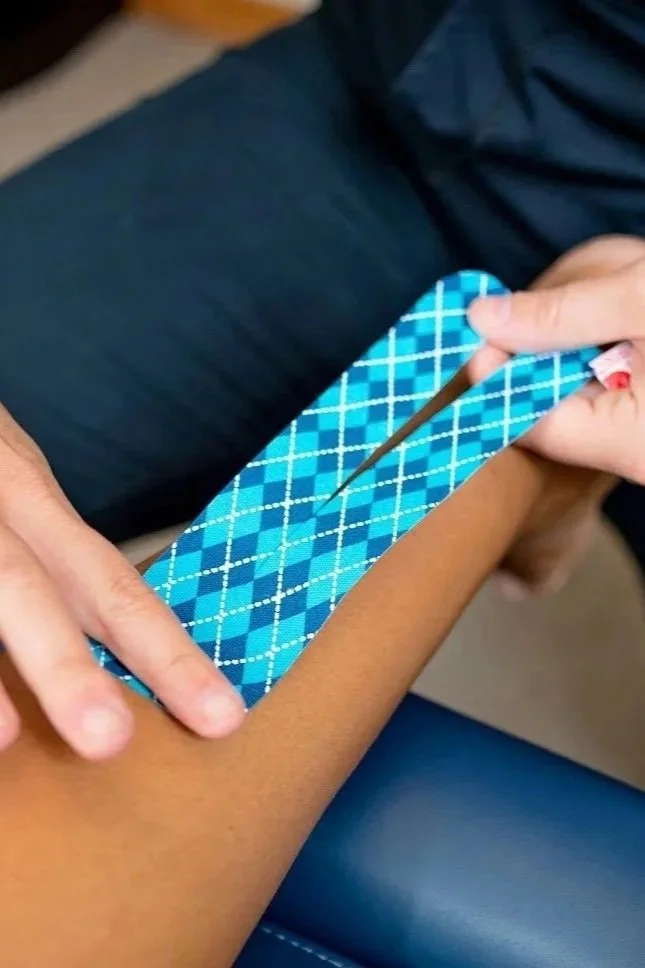
- Kinesiology taping for support during work.
- Corrective exercises including nerve glides, grip work and posture drills, plus simple workstation and tool tips.
Watch: Dequervine's Tenosynovitis
Treated by an extremity-certified chiropractor who teaches other doctors
Hand numbness needs someone who checks the whole arm, not just the wrist. Your care at ICE is led by Dr. Kyle Bryant, DC, CCEP, the founder of Integrative Chiropractic and Extremities. Dr. Bryant is a Certified Chiropractic Extremity Practitioner (CCEP), an advanced credential awarded by the Council on Extremity Adjusting after 105 hours of advanced extremity training and a practical exam. He has 15+ years in practice, he teaches his extremity assessment approach to other chiropractors, and he has been invited onto several professional chiropractic podcasts to talk about extremity adjusting. A former collegiate, semi-pro and international soccer player, he knows first-hand what joint injuries do to the way an athlete moves.
He practices alongside Dr. Joseph Friedman, DC, who builds personalized plans around spinal and extremity adjustments and integrative therapies. Every patient gets extremity care as part of the evaluation, not as an add-on.
What to expect
Your first visit includes a detailed history, exam and, in most cases, treatment. Follow-ups usually take 10–20 minutes. Mild and recent symptoms often respond sooner than numbness that has been present for a long time. If you've already had nerve testing, bring the results.
At-home care
- Keep your wrists close to neutral (not bent sharply up or down) when typing and sleeping. A night splint helps some people.
- Take short movement breaks every 30–60 minutes during repetitive work.
- Do your prescribed nerve-glide and strength exercises gently. They shouldn't increase symptoms.
When to see a medical doctor
See a medical provider if numbness is constant, you notice the muscle at the base of your thumb shrinking, your grip is getting weaker, or symptoms follow a fall with swelling and tenderness in the wrist (a fractured wrist bone can be missed). Sudden weakness or numbness on one side of the body, facial droop or trouble speaking needs a 911 call. Some severe carpal tunnel cases need nerve testing or a surgical opinion, and we'll refer you when that's the right step.
Frequently asked questions
Can a chiropractor help carpal tunnel syndrome?
Many people with mild to moderate symptoms are good candidates for conservative care that addresses wrist joint motion, the forearm, the neck and daily habits. Severe or progressive cases, such as constant numbness or thumb-muscle wasting, should be evaluated medically, and we'll refer you if we see those signs.
How do I know if it's my wrist or my neck?
The pattern of symptoms, which fingers are affected, and specific tests in the exam help tell them apart. It's also common for both to contribute. That's why we check the whole arm and neck.
Why are my symptoms worse at night?
Many people sleep with their wrists bent, which raises pressure in the carpal tunnel. Keeping the wrist neutral at night often helps.
Will I need surgery?
Many people don't, especially when they start care early. Surgery may be recommended for severe or progressive cases. We'll tell you honestly if your findings suggest a surgical consult.
Do you treat De Quervain's tendonitis?
Yes. We commonly treat thumb-side wrist pain with joint work for the wrist and thumb, soft tissue care, laser therapy, taping and a graded exercise plan.
Get your wrist or hand pain evaluated in Kennewick
You don't have to keep guessing. Our doctors will look at the painful area and the joints above and below it, show you what they find, and walk you through a plan you can understand.
Integrative Chiropractic and Extremities (ICE Clinics) · 7117 W Hood Pl, Ste 130, Kennewick, WA 99336
Hours: Mon/Wed/Fri 9:00–12:30 & 3:30–6:00 · Tue/Thu 9:00–12:30 & 2:30–5:00
Paying for care: we are primarily self-pay, and we also accept Medicare, auto injury claims and L&I (Washington Labor & Industries) claims. No referral is needed. See what to expect as a new patient.
Book Your Visit Online Call (509) 820-3828
Related conditions
Tennis & golfer's elbow · Shoulder pain · Headaches & migraines
Back to all conditions we treat.
This page is general health information, not a diagnosis or a promise of results. Everyone responds differently. If you have severe, sudden or worsening symptoms, please contact your medical provider or call 911.