
Bunions and Big-Toe Pain

Ready to find out what's really behind your bunion or big-toe pain?
New patients welcome from Kennewick, Richland, Pasco, West Richland and across the Tri-Cities.
Book Online Call (509) 820-3828
A bunion is more than a bump on the side of your foot. It changes how your big toe moves, and that can affect how your whole foot, ankle, knee and hip work when you walk. At ICE in Kennewick we evaluate bunions with that bigger picture in mind, and we focus on what you can do to ease pain and protect the joint before it gets worse.
What is a bunion?
A bunion (hallux valgus) is a gradual change in the joint at the base of the big toe, the first metatarsophalangeal joint. Over time the big toe drifts toward the smaller toes, and the joint pushes outward, forming the familiar bump. As it progresses, a bunion can lead to:
- Pain and swelling around the big-toe joint
- Redness and rubbing where shoes press
- Stiffness and loss of big-toe motion
- Arthritis in the joint over time
- Changes in the way your entire foot functions
A related problem, hallux rigidus, is stiffness and arthritis in the same joint without much drift. Both make it harder for the big toe to bend upward when you push off.
Why big-toe motion matters
Your big toe is designed to extend upward every time you take a step. That motion is essential for walking efficiently, running, balance, absorbing force and a normal push-off. When the big toe loses that ability, the rest of the foot becomes more rigid. The stiffness doesn't stay in the foot. It can change the mechanics of your ankle, knee, hip and even your low back.
Common causes
- Narrow or pointed shoes: footwear that squeezes the front of the foot, day after day, can gradually push the big toe out of position. Dress shoes, pointed styles, high heels and some athletic shoes are common culprits.
- Genetics and foot type: bunions often run in families, and flat or very flexible feet can make them more likely.
- Foot mechanics: a collapsing arch, stiff midfoot joints or weak foot muscles shift more load onto the big-toe joint.
- Arthritis and joint conditions can also play a role.
Try the shoe test
Take the insole out of one of your everyday shoes and stand on it barefoot with your heel all the way back. If your toes or forefoot hang over the edges, that shoe is squeezing your foot every time you wear it. Our blog post The Hidden Cause of Bunions walks through it step by step.
Watch: The #1 Cause of Bunions (Almost Everyone Is Doing This Wrong!)
How ICE helps with bunions
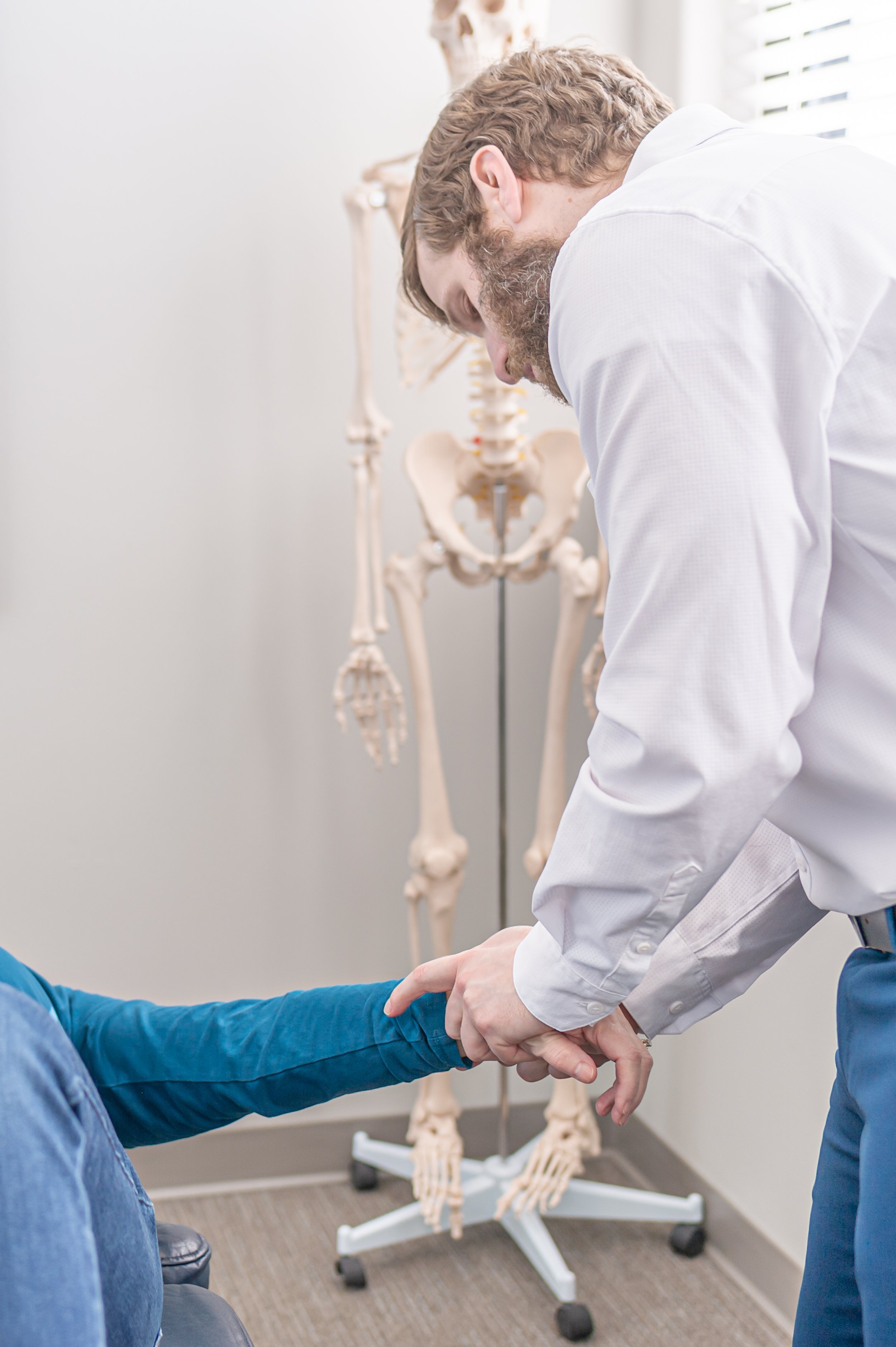
Once significant bony changes have developed, they generally can't be reversed without surgery. Conservative care aims to reduce pain, improve how the toe and foot move, and slow the stress on the joint. Your exam may include foot and gait analysis, joint mobility testing of the big toe, midfoot and ankle, and a check of muscle function up the chain. After treatment we re-test so you can see what changed.
Care may include:
- Extremity adjustments to improve motion in the big-toe joint, midfoot and ankle where appropriate.
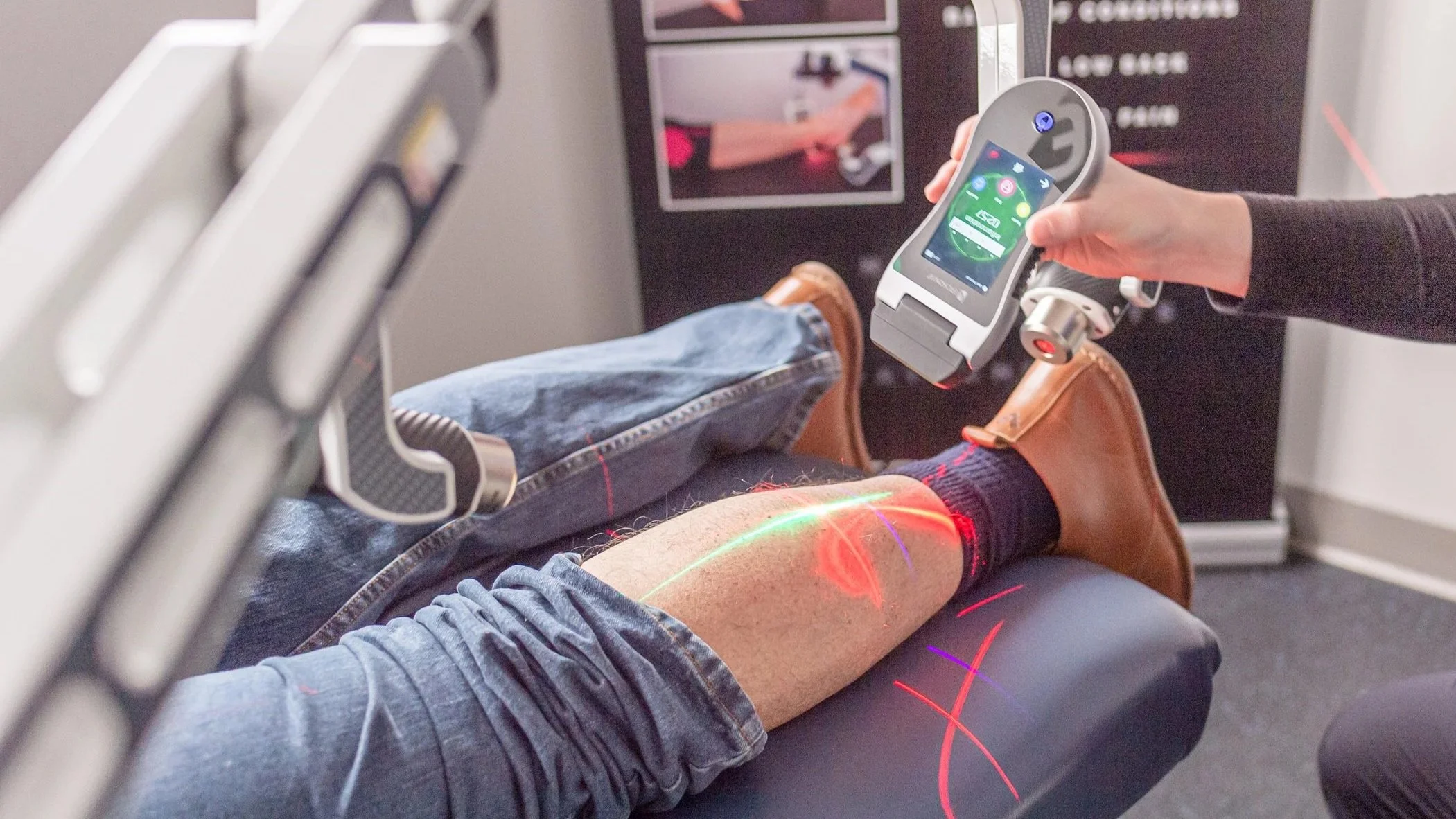
- Low-level laser therapy to help calm a sore, irritated joint.
- Manual therapy for tight tissue around the toe and arch.
- Kinesiology taping to support toe position during activity.
- Corrective exercises for toe spreading, big-toe control and arch strength.
- Footwear coaching: wider toe boxes and shoes that let your toes spread.
Treated by an extremity-certified chiropractor who teaches other doctors
Bunions are a foot problem with whole-body effects, which is why our extremity-focused evaluation goes beyond the bump. Your care at ICE is led by Dr. Kyle Bryant, DC, CCEP, the founder of Integrative Chiropractic and Extremities. Dr. Bryant is a Certified Chiropractic Extremity Practitioner (CCEP), an advanced credential awarded by the Council on Extremity Adjusting after 105 hours of advanced extremity training and a practical exam. He has 15+ years in practice, he teaches his extremity assessment approach to other chiropractors, and he has been invited onto several professional chiropractic podcasts to talk about extremity adjusting. A former collegiate, semi-pro and international soccer player, he knows first-hand what joint injuries do to the way an athlete moves.
He practices alongside Dr. Joseph Friedman, DC, who builds personalized plans around spinal and extremity adjustments and integrative therapies. Every patient gets extremity care as part of the evaluation, not as an add-on.
What to expect
Initial visits typically take 15–60 minutes, and in most cases treatment starts the same day. Follow-ups usually take 10–20 minutes. Many people notice better comfort and toe motion with care and better shoes, but bunions are a long-term condition, so the daily habits you build matter most.
At-home care
- Choose shoes with a wide, foot-shaped toe box, and limit time in narrow or high-heeled shoes.
- Spend some time barefoot on safe, comfortable surfaces to let your toes spread (unless you have diabetes or poor sensation in your feet).
- Do your toe and arch exercises daily. They only take a few minutes.
When to see a medical doctor
See a medical provider if the big-toe joint suddenly becomes red, hot and very painful (gout or infection), if you have diabetes or poor circulation and notice sores, blisters or color changes, or if pain keeps you from wearing shoes or walking normally despite conservative care. A podiatrist or foot surgeon can discuss surgical options for severe or progressing deformity, and we're happy to refer you.
Frequently asked questions
Can a bunion be reversed without surgery?
Once significant bony changes have developed, they generally can't be reversed without surgery. Conservative care can often reduce pain, improve toe and foot motion, and help slow further stress on the joint, especially when started early.
Do shoes really cause bunions?
Genetics and foot type play a role, but narrow footwear that compresses the forefoot day after day is one of the most common contributors. Switching to a wider toe box is one of the simplest things you can do.
Are toe spacers helpful?
Some people find toe spacers comfortable and helpful as part of a plan that also includes better shoes, foot strengthening and joint mobility work. They aren't a stand-alone fix.
Why would a bunion cause knee or back pain?
A stiff big toe changes how you push off when you walk. The foot becomes more rigid, and the ankle, knee, hip and low back have to compensate. Over thousands of steps a day, that can add up.
Do you treat kids with bunions?
Yes. Bunions can begin in childhood or the teen years. Early attention to footwear, foot strength and mechanics is especially worthwhile while the foot is still developing.
Get your bunion or big-toe pain evaluated in Kennewick
You don't have to keep guessing. Our doctors will look at the painful area and the joints above and below it, show you what they find, and walk you through a plan you can understand.
Integrative Chiropractic and Extremities (ICE Clinics) · 7117 W Hood Pl, Ste 130, Kennewick, WA 99336
Hours: Mon/Wed/Fri 9:00–12:30 & 3:30–6:00 · Tue/Thu 9:00–12:30 & 2:30–5:00
Paying for care: we are primarily self-pay, and we also accept Medicare, auto injury claims and L&I (Washington Labor & Industries) claims. No referral is needed. See what to expect as a new patient.
Book Your Visit Online Call (509) 820-3828
Related conditions
Plantar fasciitis & heel pain · Knee pain & IT band · Hip pain
Back to all conditions we treat.
This page is general health information, not a diagnosis or a promise of results. Everyone responds differently. If you have severe, sudden or worsening symptoms, please contact your medical provider or call 911.